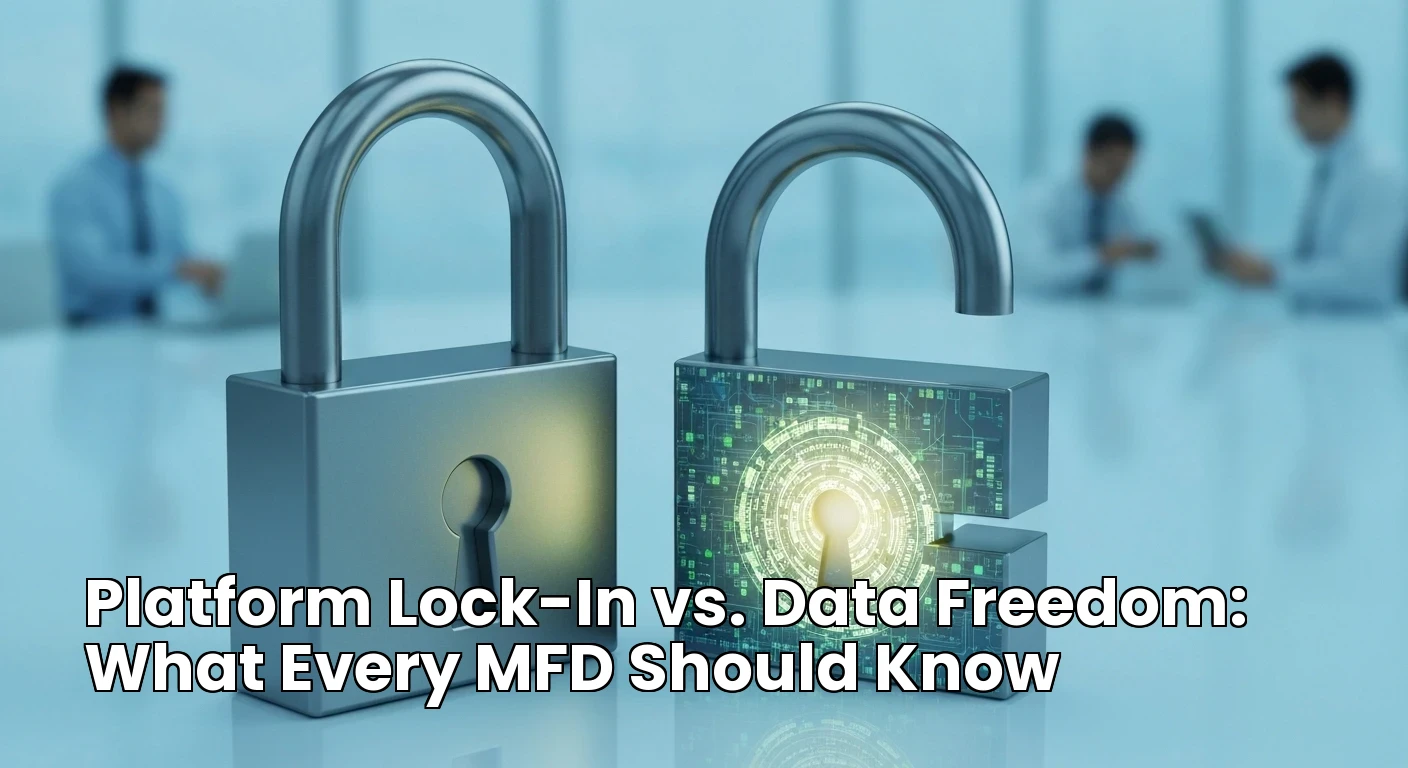
Platform Lock-In vs. Data Freedom: What Every MFD Should Know
When you choose an MFD platform, you are not just choosing software. You are choosing a relationship that can shape your business for years. Some platforms make it easy to enter but hard to leave. This is called platform lock-in, and it is a serious risk for mutual fund distributors. On the other side, data freedom gives you full control over your client data, your workflow, and your future. Understanding the difference is critical for every MFD who wants to grow without regret.
What Is MFD Platform Lock-In?
Platform lock-in happens when a software vendor makes it difficult to switch to another solution. This can take many forms. The platform may not allow data export. It may charge high exit fees. It may use a proprietary file format. It may not provide proper support during transition. Some vendors even try to control your client communication so that your investors become loyal to the platform, not to you.
Lock-in is not always obvious at first. A platform may look attractive because of low upfront cost or easy onboarding. Over time, as your client data grows and your team depends on the system, the cost of leaving becomes too high. This is when lock-in becomes a trap.
Why Lock-In Hurts MFD Businesses
A locked-in MFD loses bargaining power. If the vendor raises prices, reduces support, or changes features, you have little choice but to accept it. You cannot easily move to a better MFD platform. Your clients may start to see the vendor's brand more than your brand, which weakens your own identity.
Lock-in also limits your ability to innovate. You may want to integrate with new AMCs, add a mobile app, or switch to a white label solution. If your platform does not support these options, your growth stalls. In a competitive market, standing still means falling behind.
What Does Data Freedom Mean for MFDs?
Data freedom means that your client data is always accessible, portable, and under your control. You can view it, export it, and move it whenever you need. A data-freedom-friendly MFD platform provides standard export formats, clear data ownership terms, and assistance during migration.
Data freedom also means transparency. You know where your data is stored, who can access it, and how it is protected. This is essential for building client trust and for SEBI and AMFI compliance.
How to Check for Lock-In Before Signing Up
Before choosing any MFD platform, ask the right questions. Can I export my full client data at any time? Is there a contract lock-in period or exit fee? Can I use my own domain and branding? What happens to my data if I leave? If the answers are unclear or restrictive, that is a warning sign.
Also look at the contract. Notice periods, data export rights, and billing terms should be clearly stated. Avoid platforms that keep your data hostage or charge unreasonable amounts for a copy of your own client records.
Data Freedom Builds Long-Term Value
A business that owns its data is more valuable. If you ever want to sell your practice, merge with another distributor, or hand over to a successor, a portable client book is a major asset. Buyers and successors want clean, exportable records, not data trapped in a third-party system.
Data freedom also gives you the confidence to test new tools. You can try a new feature, integrate another service, or switch platforms without fear. This agility is a competitive advantage in the fast-changing mutual fund industry.
Conclusion
The choice between MFD platform lock-in and data freedom is one of the most important decisions a mutual fund distributor can make. Lock-in limits your options, weakens your brand, and creates long-term risk. Data freedom gives you control, flexibility, and a business that is easier to scale, sell, or transition. Always choose an MFD platform that treats your data as your own.